

LeydenJar Launches Silyte™ Fast-Track Evaluation Program for Wearables
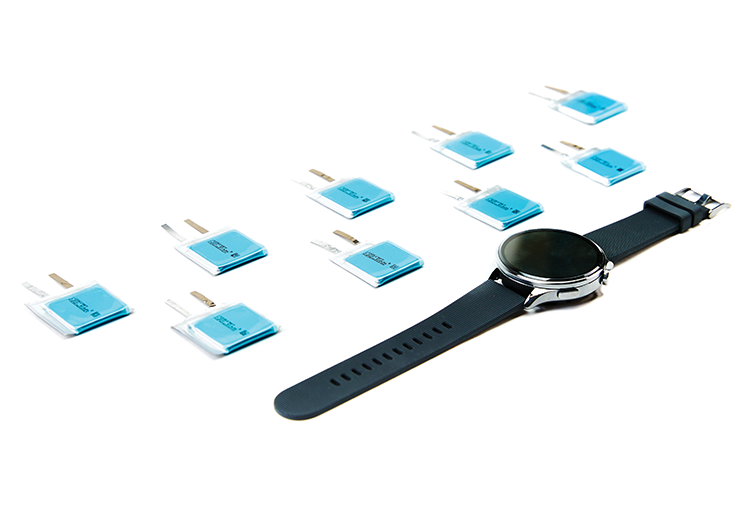
Smartwatch Cells with Silyte Anodes
Prequalified 27x27 mm sample cell debuts at IFA Berlin 2026 to speed silicon anode integration into next-gen smartwatches and compact wearables
Energy density shouldn't be the reason a wearable designer compromises on form factor. Our role is to help the market get access to next-generation anodes faster.”
LEIDEN, NETHERLANDS, August 4, 2026 /EINPresswire.com/ -- LeydenJar, a leading battery innovator delivering high-performance, 100% silicon anodes to the consumer electronics industry, today announced it will highlight its technology at IFA Berlin 2026 (4–8 September, Messe Berlin). The company will launch its Silyte™ Fast-Track Evaluation Program, centered on prequalified sample cells, with the first being a 27x27 mm cell optimized for smartwatches and compact wearables. — Evan Sanders, CCO of LeydenJar
By offering a standardized reference cell produced at partner cell manufacturers, the program accelerates the evaluation and qualification timeline for design teams and product engineers looking to integrate next-generation silicon anode technology into upcoming device release cycles. Silyte™ is Leyden Jar's proprietary 100% pure silicon anode material, produced as continuous rolls, that increases the energy density of Li-ion batteries by 50% compared to conventional graphite anodes.
"Energy density shouldn't be the reason a wearable designer compromises on form factor," said Evan Sanders, Chief Commercial Officer at LeydenJar. "Our role is to help the market get access to next-generation anodes faster. Through our partner cell manufacturers and a prequalified 27x27 mm reference cell, we want to make it easy for teams to evaluate what a silicon anode actually does for a wearable device and move quickly from evaluation to integration."
The announcement follows the recent completion of core infrastructure at PlantOne, LeydenJar's production-scale anode manufacturing facility in Eindhoven, Netherlands. Anode roll production is currently underway, with expanded commercial capacity coming online in 2027 as the company brings its next-generation roll-to-roll manufacturing line into full operation. LeydenJar is the first anode manufacturer of its scale in the Netherlands.
Requesting Samples
Starting at IFA Berlin 2026, cell manufacturers and consumer wearable brands can request Silyte™ 27x27 mm sample cells and anode roll to initiate testing. Sample quantities are limited. Brands planning to feature silicon anode technology in an upcoming hardware roadmap are encouraged to begin sample testing now. The company is accepting requests directly through a LeydenJar representative at the IFA exhibit (Hall 25 Stand 247), or via an online request form.
About LeydenJar
LeydenJar is a leading battery innovator delivering high-performance, 100% silicon anodes to the consumer electronics industry. Recognized in Fast Company's World's Most Innovative Companies list in 2026 (No. 5, EMEA category), and by TIME and Statista as one of the World's Top 250 GreenTech Companies in 2025, LeydenJar started as a spin-off from TNO, the Netherlands Organization for Applied Scientific Research, in 2016. LeydenJar has developed a patented silicon anode technology that increases the energy density of Li-ion batteries by up to 50%, contributing to smaller or more powerful batteries for next-generation smart devices. With a mission to power the future of smart devices through breakthrough battery technology, LeydenJar recently secured €100 million in funding to accelerate commercialization and is building its first large-scale PlantOne production facility, set to launch in 2027.
Ewout Lubberman
LeydenJar
ewout.lubberman@leyden-jar.com
Visit us on social media:
LinkedIn
YouTube
Legal Disclaimer:
EIN Presswire provides this news content "as is" without warranty of any kind. We do not accept any responsibility or liability for the accuracy, content, images, videos, licenses, completeness, legality, or reliability of the information contained in this article. If you have any complaints or copyright issues related to this article, kindly contact the author above.
